


How Fast Can a New Setting-Out Team Mobilise Onto a Piling Programme?
A piling rig can’t wait for a slow handover. What actually determines fast, competent mobilisation onto a piling programme — and the questions worth asking before you need cover urgently.

What Reliability Actually Looks Like From a Site Engineering Partner
Reliability isn’t attendance — it’s what a site engineering partner does when a quality check finds a problem. What to check before you book, and why continuity of people matters as much as continuity of data.

Pre-Construction Survey Planning — The Five Risks You Can Eliminate Before Breaking Ground
The right pre-construction survey work eliminates five of the most expensive risks on a UK project before breaking ground: utility strikes, dimensional disputes, setting-out errors, drainage assumptions and as-built gaps. Here's the survey that removes each.
How to Specify Site Engineering Cover for a Long-Term Project
Specifying long-term site engineering well means defining scope, deliverables, standards and resourcing up front, so it can be priced accurately on a day rate. Get those clear and you avoid the gaps that lead to rework, disputes and standing time on a long programme.

3D Scanning and Setting Out — The Case for Using Both on a UK Construction Project
Setting out puts the design into the ground; 3D scanning verifies what was built. Used together they catch errors early, confirm tolerance and produce a defensible as-built record — one team, one control network.
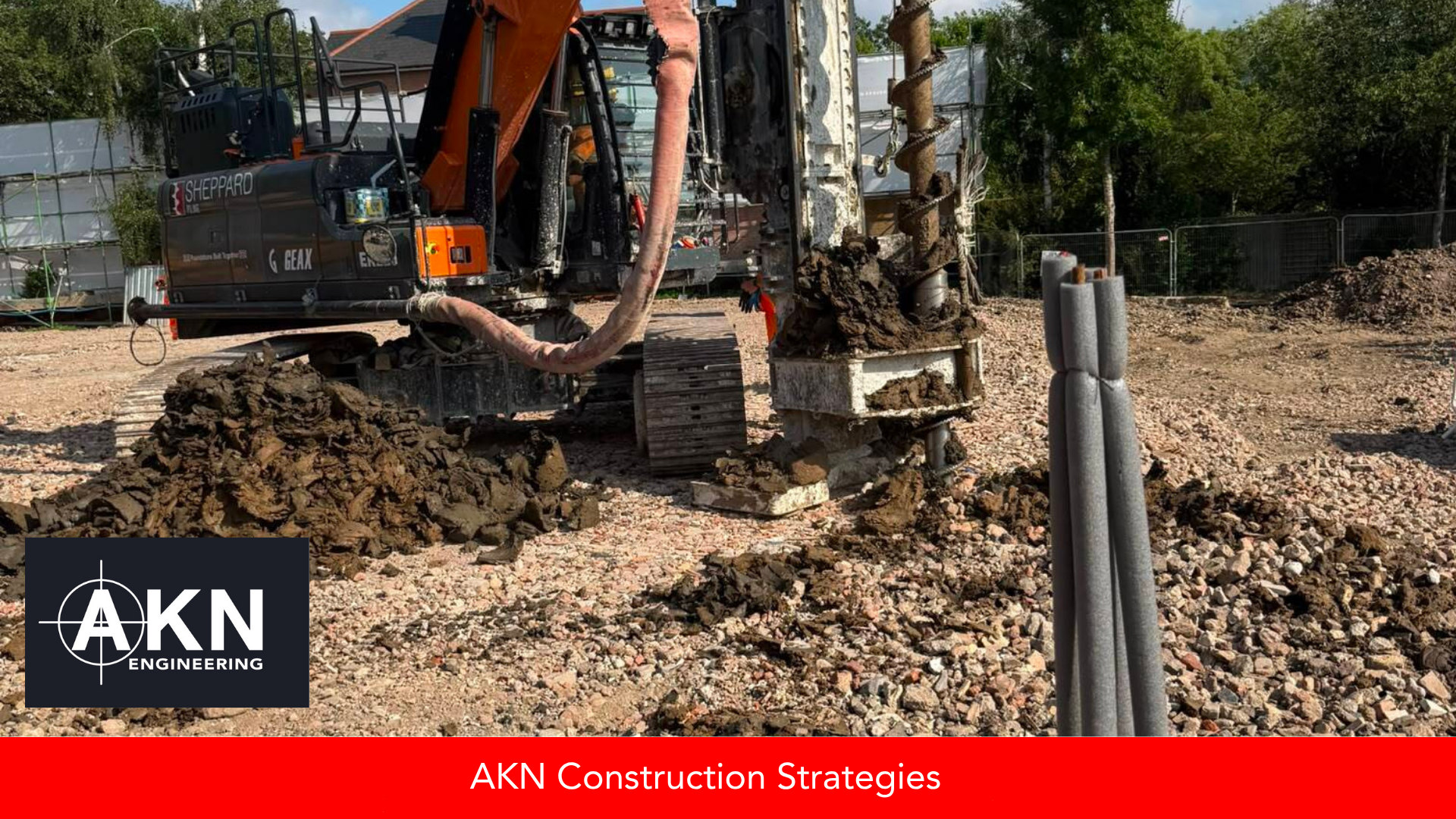
Piling Setting Out on UK Construction Projects — What It Involves and Why Accuracy Matters
Piling setting out positions every pile to the design as the rig works. Accurate, independently checked set-out avoids rig standing time, remedial piles and redesign — and an as-built survey keeps the foundations defensible.

The Real Cost of a Setting Out Error on a UK Construction Project
The real cost of a setting-out error is rarely the survey — it's the rework, delay and disputes that follow. A misplaced foundation can cost tens of thousands, long after the small cost of getting it right the first time.

Setting Out Registers: What They Include and Why They Matter on UK Construction Projects
An engineering register records a site's survey framework — control points, topographic data, calibration certificates and survey targets — while the site diary logs the daily setting out. Kept separate and complete, the two form a defensible record that protects the contractor at final account.

Why Main Contractors Use a Retained Survey Engineer on UK Construction Projects
A retained survey engineer gives main contractors guaranteed availability, a consistent control network and a single accountable point for every survey operation — turning a reactive cost into a planned one.

What Is a GPR Survey and How It Fits Into PAS 128 (UK Guide)
Most clients ask for a 'GPR survey' when what they actually need is PAS 128 detection. This guide explains what GPR can and can't do, how it fits into Type B investigations, and what a proper survey pack should include.


