

Setting Out Registers: What They Include and Why They Matter on UK Construction Projects
An engineering register (sometimes referred to as a setting-out register) is the formal record of the survey framework underpinning a site: topographic survey data, control point details, calibration certificates for the survey instruments, and the details of any new survey targets or stations established as the works progress. It does not record the daily setting-out tasks themselves — those belong in the site diary. The register matters because it turns the foundations of every setting-out operation into a defensible, auditable record — one that protects the contractor against rework disputes and challenges at final account.
On UK construction projects across Hertfordshire, Essex, East Anglia and Cambridgeshire, the engineering register is one of the simplest pieces of survey discipline to get right and one of the most expensive to neglect. Here is what a good one contains and why it earns its place.
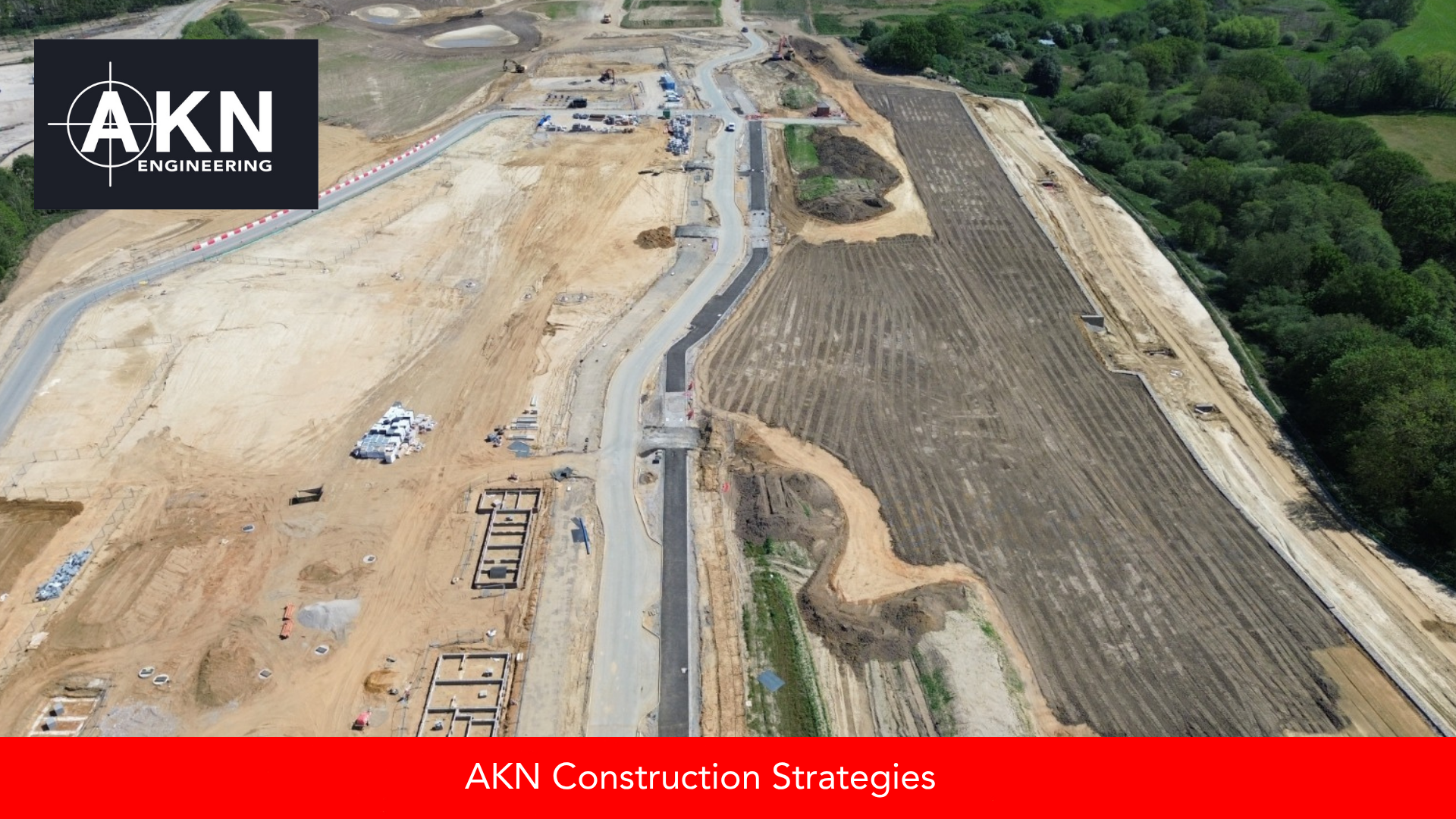
Every road, foundation, and level on a site like this ties back to accurate setting out — and a proper setting out register keeps that control traceable from start to finish.
What is a setting out register?
It is the engineer's formal record of the survey framework — the control network, topographic survey data, instrument calibration certificates, and any new survey targets or stations. Rather than living in someone's head or scattered across field notes, that information is kept in one consistent place, separate from the daily setting-out detail, which is logged in the site diary. If a question arises weeks later about how the control was established or whether the instruments were calibrated, the answer is in the register.
What a good engineering register includes
Topographic survey data captured on site.
Control point details — coordinates, descriptions, and the network they form.
Calibration certificates for the survey instruments used (total stations, GNSS receivers and levels).
Details of any new survey targets or stations established as the works progress.
It does not include the daily setting-out tasks themselves — what was set out on a given day, and against which drawing revision. Those belong in the site diary.
The engineering register and the site diary — what goes where
The two records do different jobs and are deliberately kept separate. The engineering register holds the survey framework: control, topographic data, instrument calibration and survey targets. The site diary holds the daily record of setting-out operations as they happen — what was set out, when, by whom, and against which drawing revision. The register proves the framework was sound; the site diary shows what was done day to day. Together they form the complete, defensible record of a project's survey work.
Why it matters commercially
Setting out is where design becomes physical, and if something is built in the wrong place the first question is whether the survey framework was correct. A complete engineering register answers that: it shows the control network was established and maintained properly, the instruments were calibrated and traceable, and the targets were verified. Read alongside the site diary's day-to-day record, it lets the contractor deal in evidence rather than memory.
How it protects you at final account
Disputes at final account often turn on whether the works were set out correctly. The engineering register demonstrates the foundations were sound — calibrated instruments, a verified control network, documented targets — while the site diary shows the daily setting out against the correct drawing revisions. Calibration certificates matter here: they prove the kit was accurate at the time the work was done. Without a maintained register, even a thorough site diary rests on a framework you can't prove, and that gap is exactly what an opposing party will probe.
Who should maintain it
The engineering register is the site engineer's responsibility, which is one more reason continuity matters. A directly employed or retained engineer who stays with the programme keeps the register consistent and complete. When engineers rotate, records fragment — different formats, gaps at handover, and a calibration certificate or control update that nobody logged.
Working with AKN Engineering
AKN Engineering's site engineers maintain a clear, consistent engineering register on every package as standard, so the record is there if you ever need it — across Hertfordshire, Essex, East Anglia and Cambridgeshire. It is part of how we protect both the works and our clients' commercial position.
To discuss setting out and survey support for your next package, speak to AKN Engineering.