

The Real Cost of a Setting Out Error on a UK Construction Project
The real cost of a setting-out error is rarely the survey work itself — it is the rework, programme delay, disputed variations and damaged client relationships that follow. A misplaced foundation or an out-of-tolerance level can cost tens of thousands of pounds to put right, plus the programme time lost, long after the few hundred pounds it would have taken to get it right the first time.
On UK construction projects across Hertfordshire, Essex, East Anglia and Cambridgeshire, setting-out errors are among the most expensive mistakes a project can make precisely because they are discovered late. Here is where the cost actually lands — and how it is prevented.
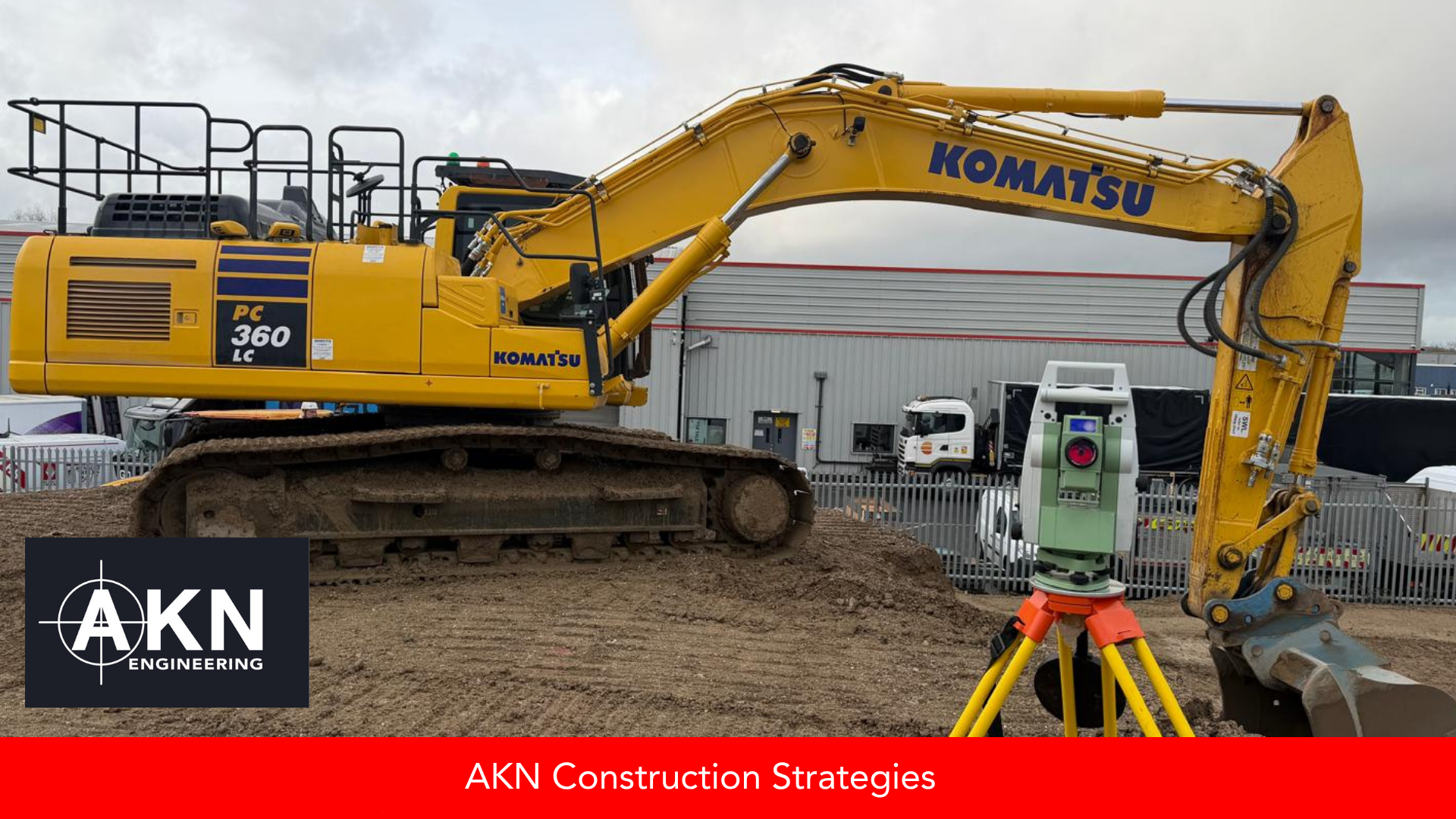
The instrument on the left of the machine is what keeps the machine on the right from becoming expensive. Accurate control and independent checking cost a fraction of the rework, delay and disputes that follow a setting-out error.
What counts as a setting out error?
A setting-out error is any case where the works are positioned wrongly relative to the design or the control network: a foundation in the wrong place, a level transferred incorrectly, a structure rotated or offset, drainage that does not tie in. The common thread is that the error becomes physical — concrete is poured, steel is fixed, services are laid — before anyone notices.
The direct cost: rework
The most visible cost is putting the error right. Breaking out and recasting a foundation, repositioning a structure, re-laying drainage — this is labour, plant, materials and time, often on work that was already paid for once. Rework is among the least recoverable costs on a construction project, because there is rarely anyone else to charge it to. It comes straight off the margin.
The hidden cost: programme and delay
Rework rarely happens in isolation. The trades waiting on that area stop. The follow-on work slips. A setting-out error discovered at foundation stage can ripple through the whole programme, and on a project with liquidated damages, programme slippage carries its own direct financial penalty. The delay cost frequently exceeds the rework cost itself.
The commercial cost: variations and disputes
When an error surfaces, the argument over who pays begins. Was it a setting-out mistake or a design error? Was the work set out against the current revision? This is where the setting-out register earns its place — a complete record can settle in minutes a dispute that would otherwise run for weeks. Without it, the matter comes down to recollection, and these disputes sour client relationships that took years to build and seconds to damage.
How setting out errors are prevented
Almost every setting-out error is preventable, and the preventions are unglamorous: a properly established and maintained control network, independent checking before anything is cast, a consistent setting-out register, and — underpinning all of it — continuity. An engineer who stays with the programme catches the drift that a rotating arrangement misses. The cost of doing all this well is trivial against the cost of a single error that reaches the working face.
This is the commercial logic behind every piece of survey discipline: control, checking, recording and continuity are cheap; errors are not. It is also why competent setting out is held to professional standards such as those of the Institution of Civil Engineers.
Working with AKN Engineering
AKN Engineering provides experienced site engineers, robust control networks, independent checking and consistent setting-out records across Hertfordshire, Essex, East Anglia and Cambridgeshire — the disciplines that keep setting-out errors off your project and off your final account. For long programmes, a retained or directly employed engineer gives you the continuity that prevents errors in the first place.
To protect your next programme from costly setting-out errors, speak to AKN Engineering.