

Survey Control on UK Projects: Why It Matters and How to Get It Right
On UK civils and highways projects, one of the quickest ways to lose time, burn budget, and frustrate teams is to assume the survey control is “probably fine”. If you search for survey control UK, you’ll see questions from students, grads, QSs and PMs trying to understand how control works, who is responsible for it, and why it affects programme.
So in this blog, we’re breaking down what survey control is, why it matters, and simple ways to avoid costly mistakes on site.
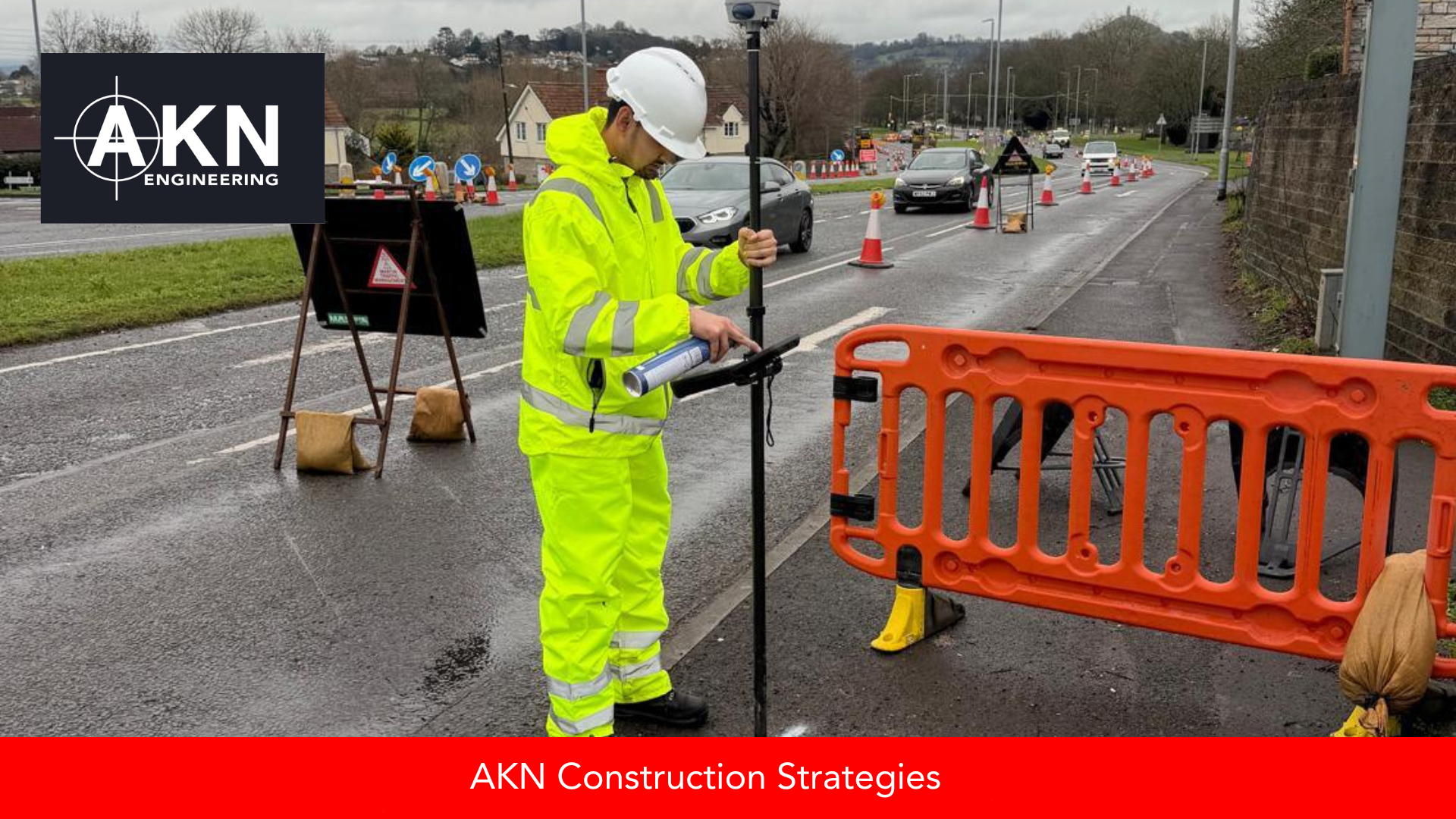
Accurate survey control underpins everything from design to setting out on UK highways projects—especially when working within live traffic environments.
What is Survey Control?
Survey control is the network of known coordinate points that anchors all measurement and construction work to a consistent reference. Without control, there is no reliable way to:
set out designs
verify positions
record as-built data
align to design models
collaborate across disciplines
Control is the foundation of accuracy. If it’s wrong, everything downstream suffers.
Primary vs Secondary Control
On most projects there are two types of control:
Primary Control
Established by surveyors using precise measurement techniques. Forms the master grid for the site. Should be:
stable
well positioned
clearly marked
documented
Secondary Control
Established from primary control by site teams to support day-to-day works. Used for:
setting out
QA checks
If primary control isn’t correct, secondary control won’t save you.
Why Survey Control Matters
On real projects, control impacts:
1. Setting Out Accuracy
If the baseline is wrong, every dimension, level, and alignment derived from it is also wrong.
2. Design Coordination
Design teams expect models and drawings to align to control. If not, clashes occur that never existed in the design.
3. Commercial & Valuations
As-built data and measurement surveys only hold value if they are tied to reliable control.
4. Handover & Compliance
Accurate records are required on infrastructure projects. This aligns with government emphasis on construction documentation standards.
Common Control Problems We See on UK Jobs
We often get called to fix issues that started weeks earlier. The most common include:
Incorrect coordinate systems or datums
Inconsistent grid orientations
Moved or disturbed control points
Poor documentation during handover
GNSS settings mismatched between contractors
Control never verified on arrival
None of these are complex, but they are expensive when ignored.
Who Owns Control?
On UK civils projects, responsibility generally sits with surveyors to establish control and engineers to maintain and verify it during construction. Bodies such as ICE promote competence standards for both surveying and engineering roles in UK infrastructure.
In practice:
Surveyors establish primary control
Site Engineers create & maintain secondary control
PMs verify competence and scope via contract
Problems start when responsibility is assumed but not written down.
Simple Ways to Improve Control on Projects
Based on our experience on civils and highways work, a few simple habits avoid most of the pain:
✔ Always check control on arrival – don’t assume it’s correct
✔ Verify coordinate system & datum with the designer
✔ Lock and protect control points (physical protection matters)
✔ Document every change or disturbance
✔ Align GNSS settings between contractors
✔ Store CAD files and control reports centrally for traceability
✔ Include control checks in ITRs
These are straightforward steps that make a measurable difference to programme certainty.
How We Support Clients with Control
We support main contractors and subcontractors with:
Control establishment and verification
GNSS configuration and calibration
Total station workflows
Alignment and as-built records
Machine control setup
Survey data management
We also train engineers on control principles because competence reduces risk more than paperwork.
Survey control is not complicated — but it is critical. When control is established correctly, verified regularly, and documented properly, everything downstream moves faster and smoother.
If you’re delivering highways, civils, or infrastructure works in the UK, control is one of the highest-leverage activities you can get right early.
👉 Visit www.aknengineering.co.uk or call ☎️ 01279 927 033 to book your next project.