

How 3D Scanning Reduces Rework, Variations and Disputes on UK Construction Projects
3D laser scanning reduces rework, variations and disputes by capturing complete, accurate existing condition data before works begin — eliminating the dimensional unknowns that generate most pre-construction claims. It provides as-built verification at handover, clash detection during design, and a permanent, measurable record that resolves condition disputes without relying on memory or incomplete records.
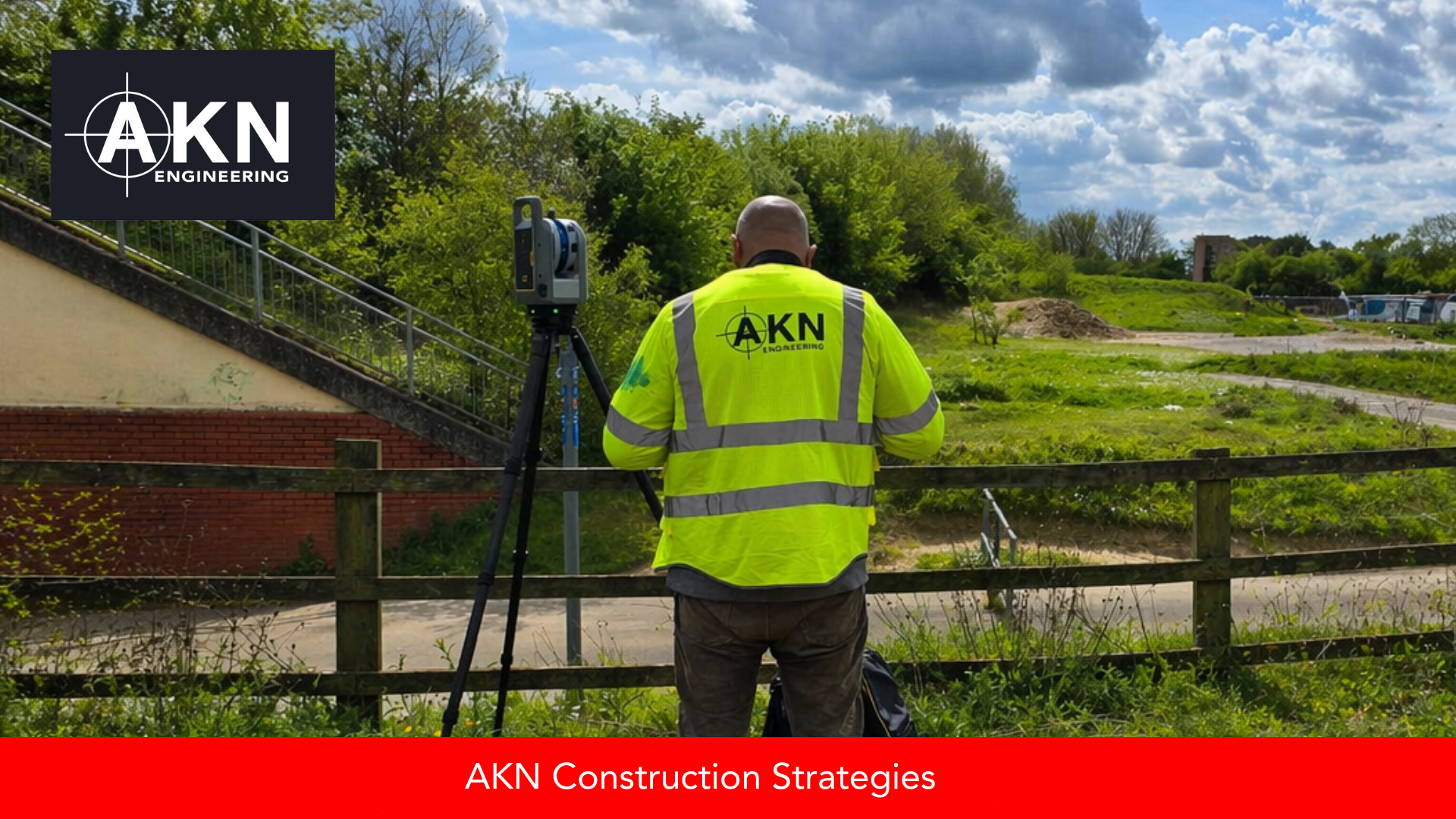
AKN Engineering on site in Hertfordshire, capturing existing site conditions with the Trimble X9 before construction begins — the point cloud data gathered at this stage is what eliminates dimensional unknowns, protects against variation claims, and gives every party a verified record to refer back to.
Where Variations and Disputes Actually Come From
Most variation claims on UK construction and infrastructure projects don't arise because something unexpected happened underground or inside a structure. They arise because nobody captured accurate existing condition data before works began, and the gap between assumed and actual conditions created a cost.
The assumptions were reasonable. The drawings were the best available. But they weren't accurate enough — and when the works revealed what was actually there, the programme and cost implications had to be negotiated.
3D scanning removes that uncertainty at the start of a project, when the cost of doing so is small.
Pre-Construction: Eliminating Dimensional Unknowns
The highest-value use of 3D scanning is before design is fixed. A complete point cloud of existing conditions — a building, a structure, a site corridor — gives designers and contractors accurate dimensional data to work from rather than assumed or approximate information.
The practical benefits:
✔ Designers can model against actual existing geometry rather than outdated drawings
✔ Dimensional clashes between proposed works and existing structure are identified at design stage, not on site
✔ The basis of the contractor's tender is an accurate existing condition record, reducing the scope for later variation claims based on 'unforeseen conditions'
For a QS or PM, this translates directly: fewer surprises during construction, a stronger basis for tendering, and less exposure on the final account.
As-Built Verification: Protecting Handover
At the other end of the programme, 3D scanning provides a complete as-built record that can be compared directly against the design model. Rather than relying on manual as-built surveys that capture only what was specifically measured, a scan captures everything — and can be interrogated for any dimension after the fact.
This matters in two specific scenarios:
Where tolerance compliance needs to be demonstrated — structural elements, floor flatness, facade alignment
Where a defect or dimensional discrepancy is identified post-handover and the question is whether it was present at completion or developed afterwards
A scan taken at practical completion creates a defensible record of the condition of the works at handover. Without it, both scenarios become a matter of interpretation rather than evidence.
Confined Spaces and Hard-to-Access Areas
Some of the highest-value scanning applications are in areas where traditional survey methods are slow, expensive, or impractical — plant rooms, roof voids, basement structures, live operational environments where access is restricted.
The Trimble X9's 150m range and automated scanning capability means these areas can be captured quickly and safely from a small number of setup positions, producing the same quality of data as open-site scanning without the access overhead.
Technical specifications for the Trimble X9 are now available.
The Commercial Case in Plain Terms
For a QS or PM evaluating whether to commission scanning on a project, the question is straightforward: What is the cost of not having accurate existing condition data?
On a project where a single variation claim based on dimensional discrepancy runs to tens of thousands of pounds — which is not unusual — the cost of a pre-construction scan is a fraction of the exposure. The data either exists or it doesn't. If it doesn't, the conversation about what existing conditions actually were is one you'd rather not have.
What We Deliver
From a 3D scanning project with AKN:
Point cloud data processed in Trimble RealWorks — a complete, measurable 3D record
CAD drawings derived from the point cloud — plans, sections, elevations, or 3D as required
All outputs tied to the project control network and compatible with topographic and utility survey data